Ground Cleared for Long-Term Use
Land Clearing in Charleston for properties with overgrown trees, heavy brush, and inaccessible acreage
Shepard Woods provides land clearing across Charleston, Dorchester, Berkeley, Williamsburg, Georgetown, and Colleton counties for residential homesites, commercial parcels, farmland, pasture, hunting properties, and general improvement projects. When trees, stumps, brush, and invasive vegetation block access or limit how you use your ground, clearing creates functional space that supports the work you need to do. Equipment including skid steers, a 309 excavator, and a John Deere 650K bulldozer handles removal and site preparation on properties across the Lowcountry where dense vegetation and varying soil conditions require different approaches.
Land clearing removes the vegetation and debris that prevent property use, then addresses root systems and ground irregularities left behind. The process varies depending on whether the project involves selective tree removal, complete vegetation clearing, stump extraction, or preparing ground for grading and construction. Lowcountry sites often include mixed hardwoods, pine stands, palmetto thickets, and undergrowth that require different equipment and techniques to clear without creating drainage problems or compacting soil.
Schedule a site visit to review current vegetation and discuss clearing requirements for your property.
What Proper Clearing Includes
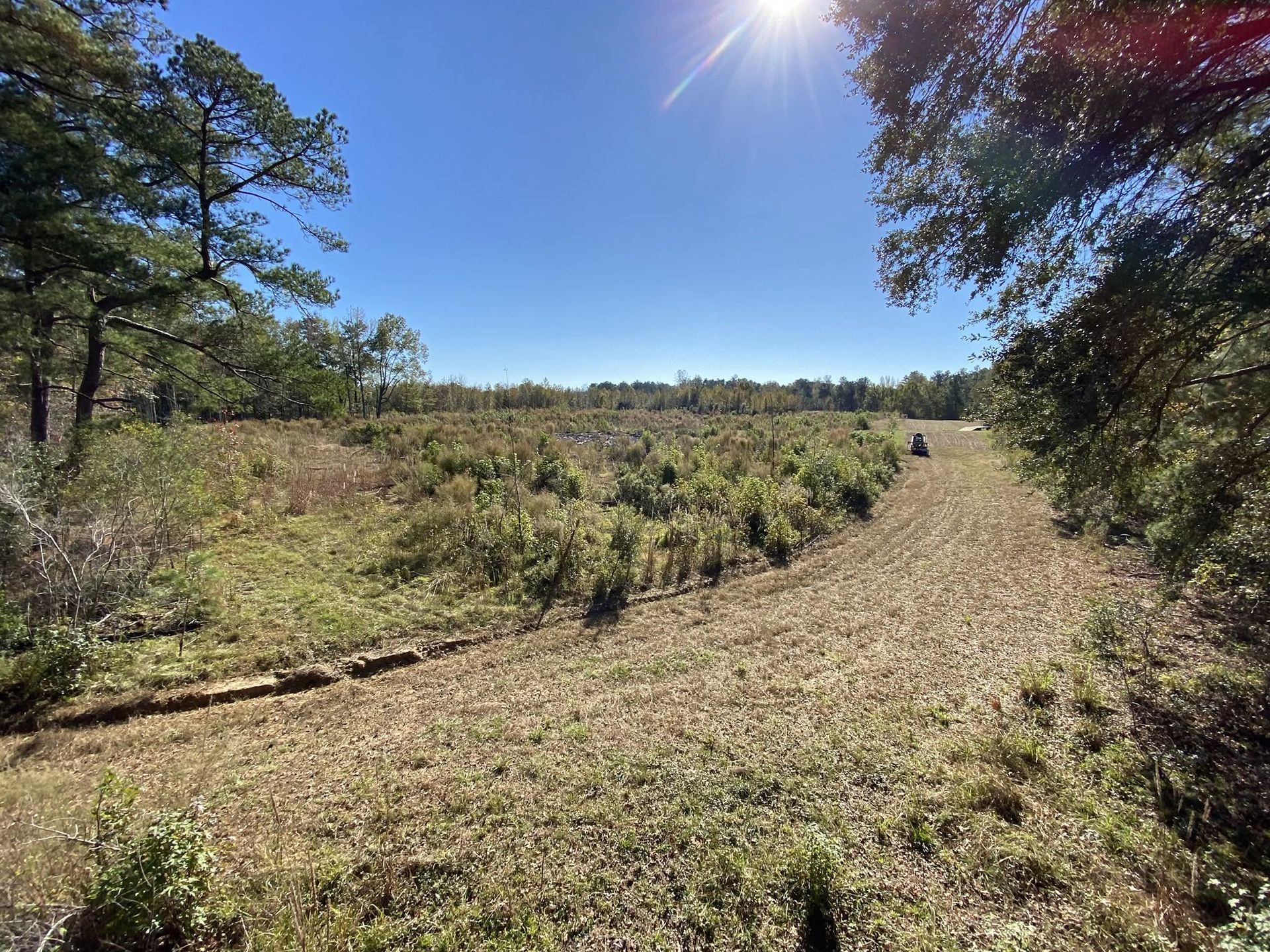
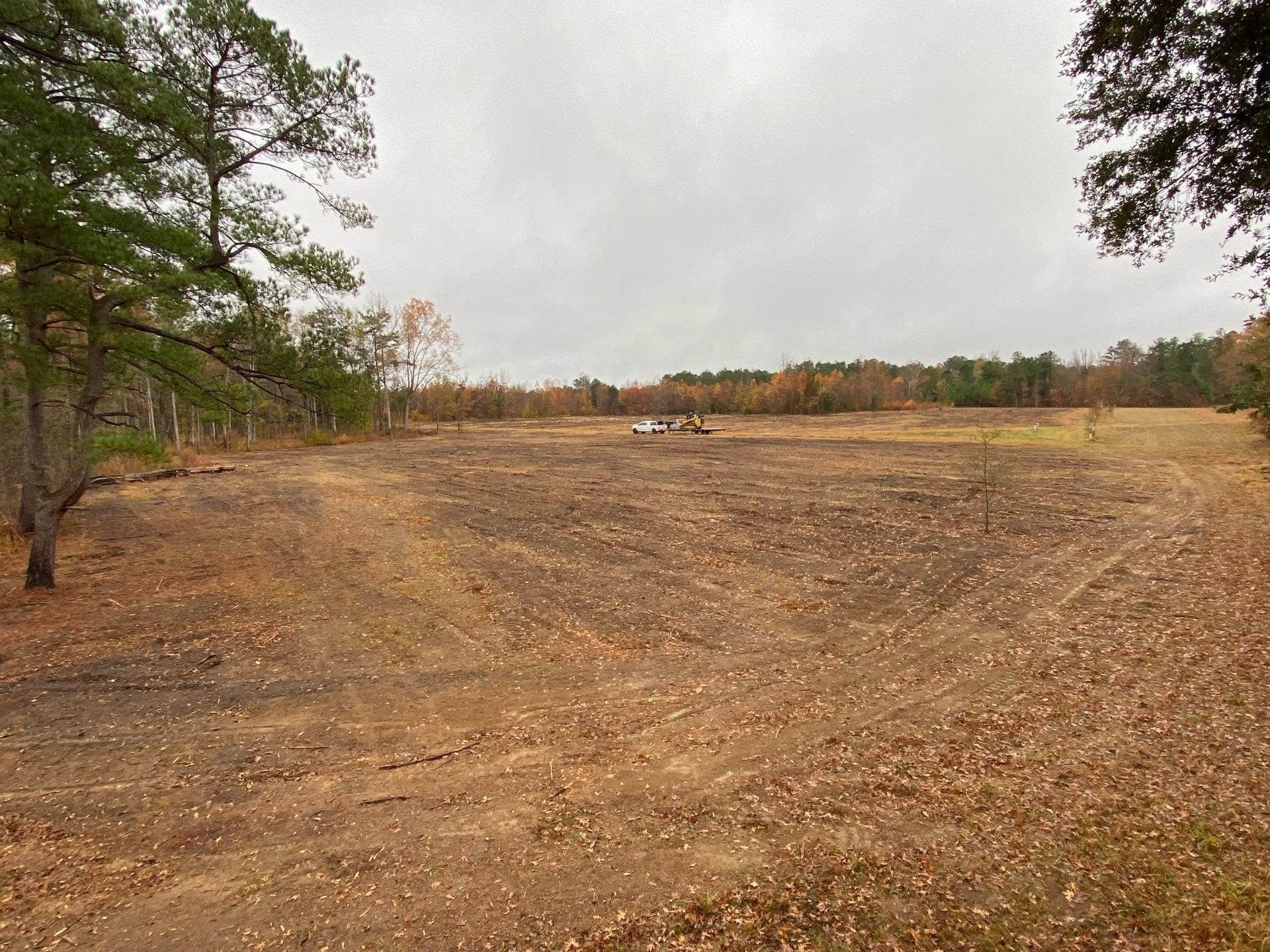
Clearing starts with removing above-ground vegetation using equipment matched to tree size, density, and the condition of the ground beneath. On rural properties where access is limited, skid steers maneuver through tighter areas while the bulldozer and excavator handle larger trees, deep root systems, and material that needs to be moved or stacked. The goal is creating clean ground without leaving debris that interferes with the next phase of use.
After clearing, the site reveals what the vegetation was hiding: grade changes, low spots, root mats, and soil composition that affect drainage and future construction.
Properties in Charleston often show sandy topsoil over clay layers, which means water movement and compaction become visible only after trees and brush are removed. You'll notice cleared ground that shows the actual contours and lets you see where grading or fill will be needed.
Debris removal and stump grinding are separate considerations that depend on how you intend to use the cleared area. Some projects require complete stump extraction and hauling, while others allow stumps to be ground below grade or pushed into windrows along property lines. The decision affects timeline, cost, and what equipment the job requires.
What Landowners Ask Before Clearing
Land clearing projects vary widely depending on property size, vegetation density, and intended use after the work is finished. These questions address common considerations for residential, commercial, and rural properties.
What happens to the material after trees and brush are removed?
Depending on your preference and site access, debris can be hauled off-site, burned where regulations allow, stacked along property boundaries, or chipped and spread if the project includes mulching equipment.
How does soil type affect clearing in the Charleston area?
Sandy Lowcountry soils drain quickly but compact under heavy equipment during wet conditions, while clay layers closer to the surface hold water and require planning around seasonal rainfall to avoid rutting and grade problems.
When should clearing be scheduled for rural properties?
Clearing during drier months reduces soil disturbance and equipment impact, though projects on well-drained sites with stable access can proceed year-round if ground conditions allow.
What determines whether a bulldozer or excavator is used?
Bulldozers push material and shape larger areas efficiently, while excavators lift root systems, load debris, and work in tighter spaces where precision matters more than pushing capacity.
How is the property left after clearing is complete?
The site will be free of standing vegetation and major debris, with ground conditions visible and accessible for the next phase of development, grading, or agricultural use.
Shepard Woods evaluates site conditions, vegetation density, and access before clearing begins to determine equipment requirements and project approach. Request an on-site evaluation and free estimate to discuss your property and clearing goals.