Dense Vegetation Reduced to Workable Ground
Forestry Mulching in Charleston for overgrown acreage, blocked access roads, and land reclamation projects
Properties with years of unchecked growth accumulate layers of brush, saplings, vines, and small trees that block access and limit use. Shepard Woods handles forestry mulching across Charleston, Dorchester, Berkeley, Williamsburg, Georgetown, and Colleton counties using a CAT 299 D3XE Land Management edition track skid steer paired with a Denis Cimaf 180D mulching head, equipment designed to process standing vegetation into ground-level mulch without requiring separate debris removal. The process converts dense overgrowth into a layer of organic material that settles into the soil, leaving cleared ground where visibility, access, and future management become possible.
Forestry mulching works by grinding trees, brush, and vegetation in place rather than cutting and hauling. The mulching head processes material up to a certain diameter, reducing it to chips that spread across the ground as the machine moves through the site. This method works well on rural acreage, hunting land, and farms where access roads need reopening, fence lines need clearing, or sections of property have become unusable due to invasive growth.
Discuss site conditions and acreage before scheduling a free estimate for mulching work.
How Mulching Changes Overgrown Property
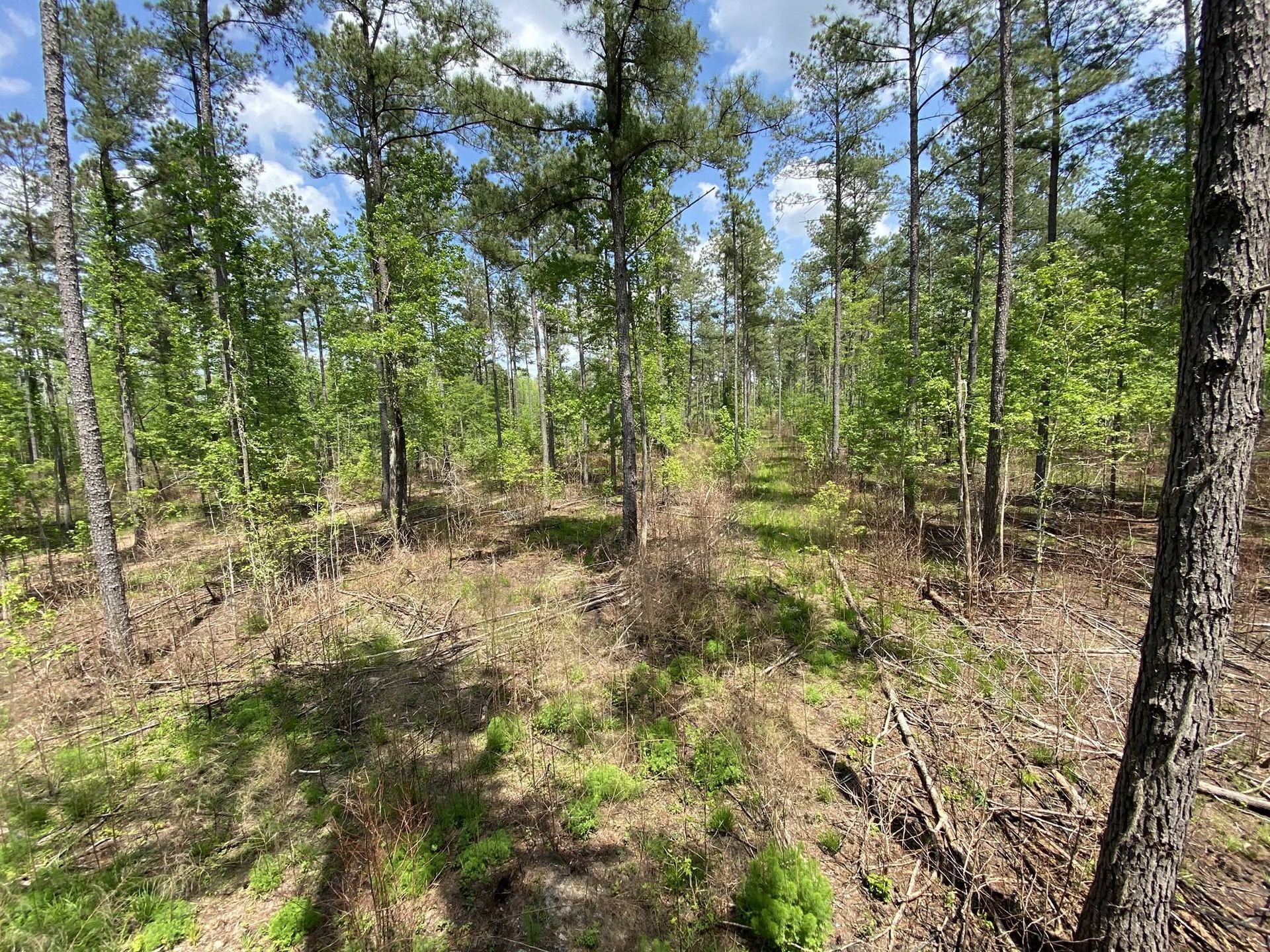
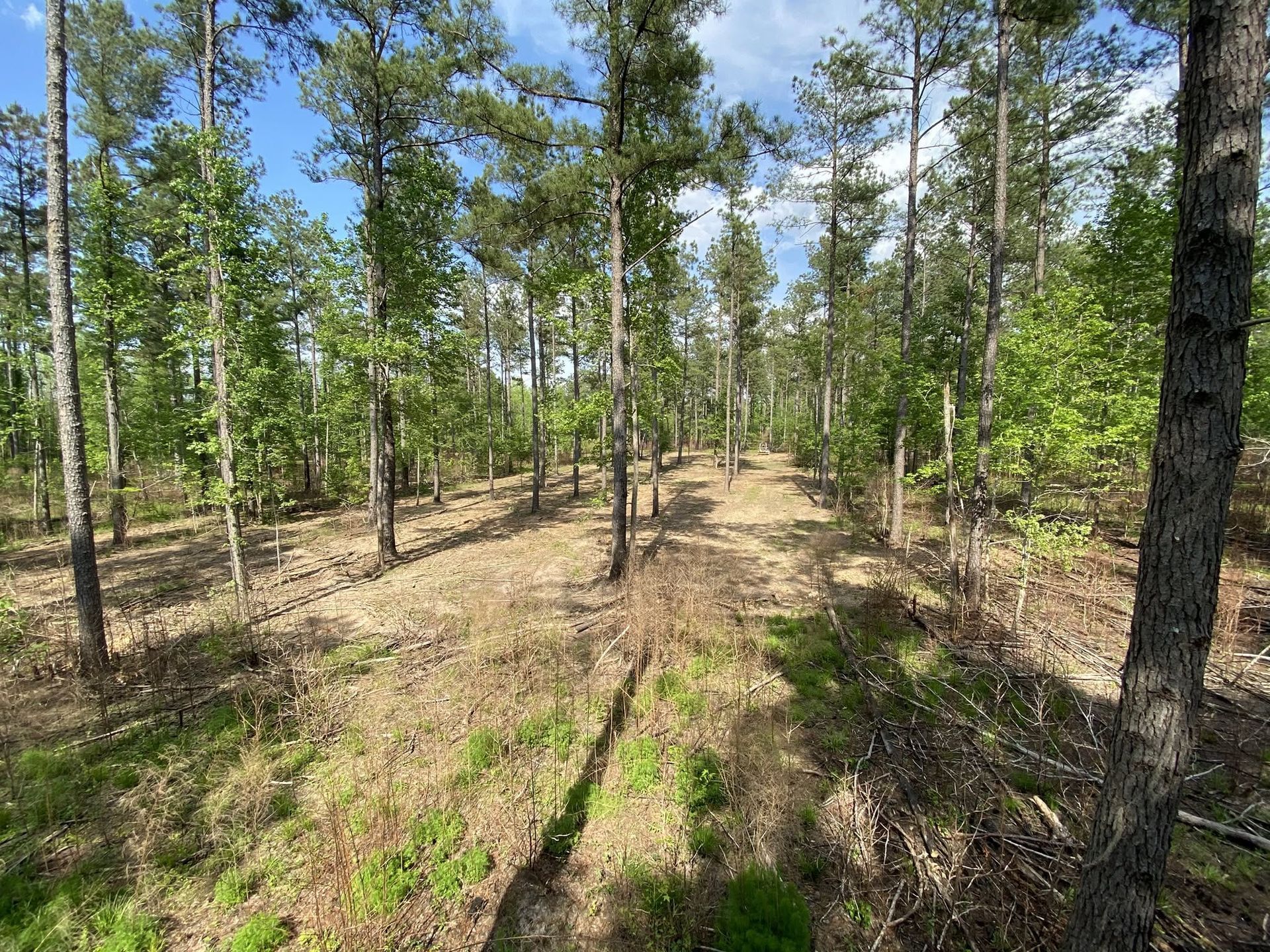
Mulching clears vegetation while leaving root systems in place, which stabilizes soil and prevents erosion on sloped or sandy ground common across the Lowcountry. The tracked skid steer distributes weight across soft or uneven terrain, allowing work to continue in areas where wheeled equipment would sink or cause ruts. The mulch layer decomposes over time, adding organic matter back into the soil rather than creating piles that need hauling or burning.
After mulching, the property shows clear sight lines, defined boundaries, and accessible paths where dense thickets once blocked movement.
The mulch blanket reduces immediate regrowth by covering stumps and suppressing seed germination, though maintenance will eventually be needed as new shoots emerge. Areas that were impassable become navigable, and the ground reveals grades, drainage patterns, and features that were hidden under vegetation.
Mulching does not remove large hardwoods, deep stumps, or material that exceeds the head's processing capacity. Properties requiring full tree removal, grading, or construction preparation may need additional clearing and excavation work beyond what mulching accomplishes. The service focuses on vegetation management and access restoration rather than site development.
Common Questions About This Service
Forestry mulching addresses overgrowth and access problems on rural properties, but the process and results differ from traditional land clearing. These questions clarify what the work involves.
What size vegetation can the mulching head process?
The Denis Cimaf 180D mulching head handles brush, saplings, and small to mid-sized trees up to several inches in diameter, but larger hardwoods and stumps require excavation or cutting before mulching can proceed.
How does mulching differ from clearing and hauling?
Mulching grinds vegetation in place and leaves processed material on-site as ground cover, while traditional clearing involves cutting, stacking, and removing debris, which takes longer and costs more but results in bare ground ready for grading.
What happens to the mulch after the work is finished?
The mulch layer settles and decomposes naturally over months, blending into the soil and reducing erosion, though it will not disappear immediately and may need raking or redistribution in high-traffic areas.
When does mulching work best in Charleston?
Mulching can proceed year-round, but drier months reduce soil disturbance and allow the tracked equipment to move across softer ground without leaving deep ruts or compacting wet soil.
Will the vegetation grow back after mulching?
Mulch suppresses regrowth temporarily by covering stumps and blocking light, but shoots and seedlings will eventually emerge, requiring periodic maintenance if you want the area to remain clear long-term.
Shepard Woods evaluates property conditions, vegetation density, and access limitations before mulching begins to confirm the equipment and approach will deliver the results you need. Call to discuss your acreage and request a site evaluation and free estimate.